
Several warning lights at once usually means one shared cause - power, ground, network or a sensor feeding multiple systems. How to read the pattern, and how to tell when the instrument cluster itself is generating false warnings.
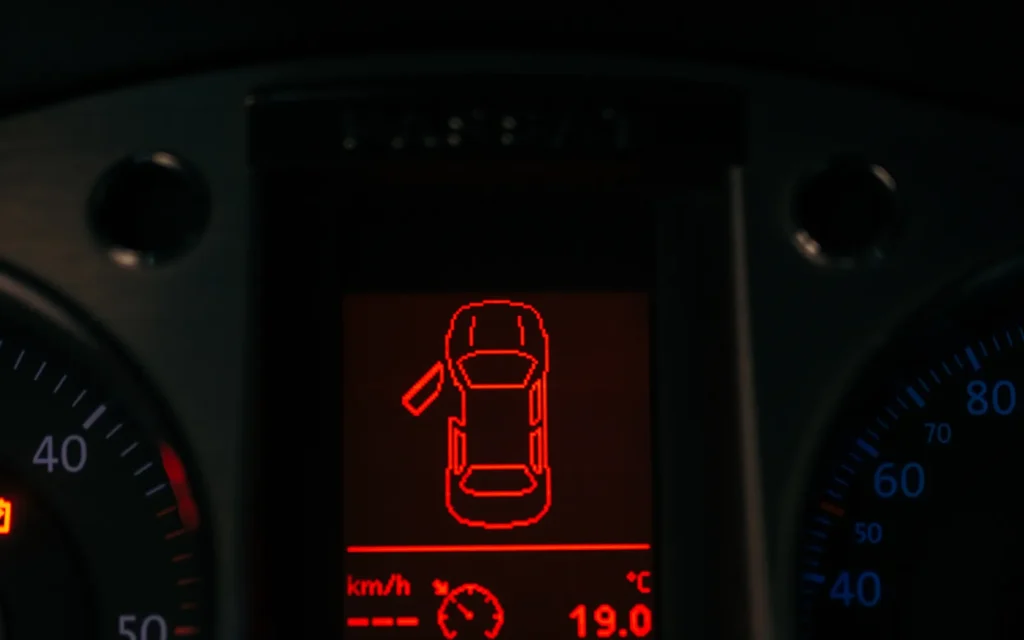
Three or four warning lights arriving together looks like three or four separate failures. It almost never is. When several systems complain at the same moment, the usual explanation is one problem that all of them depend on.
Understanding which shared dependency is involved turns an intimidating dashboard into a short list.
Modern vehicle systems are not independent. They share power supplies, share ground paths, share a communication network, and share sensor data. A failure in anything shared propagates outward, and each affected module reports the problem in its own language.
The stability control module, for example, needs wheel speed data, steering angle, yaw rate and engine torque information. Take away any one of those and it cannot do its job, so it switches off and illuminates. The ABS module often does the same. Neither is broken.
This is the first thing to check and the most frequently overlooked. Modules are designed to operate within a voltage range. Below it they behave unpredictably, set implausible codes and drop off the network. A battery that is failing under load, a charging system that is not keeping up, or corroded battery terminals will produce a dashboard full of unrelated warnings.
The tell is timing: lights that appear at start-up, during cranking, or when a heavy load switches on point strongly at supply rather than at any of the systems complaining.
Several modules commonly share a ground point. When that connection corrodes, the resistance rises and every module on it sees a shifted reference. Symptoms are often bizarre and seemingly unrelated — gauges moving when you indicate, lights dimming when a different system activates.
Ground faults are found by voltage drop testing under load, described in diagnosing electrical faults before replacing parts.
If modules cannot talk to each other, each one reports that its neighbours have gone missing. This produces U-prefixed communication codes across multiple modules at once, and frequently a cluster full of lights.
The cause is usually the network wiring or a single module that has failed in a way that disrupts the bus for everyone. A module dragging the network down will take unrelated systems with it.
A single wheel speed sensor supplies ABS, stability control, the speedometer, the transmission controller and cruise control. When it fails, all of those report faults simultaneously. The same pattern applies to steering angle and brake pedal position sensors.
The diagnostic value here is in the overlap: work out what the affected systems have in common, and the shared input is usually the fault. Individual sensor symptoms are covered in signs a vehicle sensor is failing.
| What you see | Most likely area |
|---|---|
| Lights appear at start-up or during cranking | Battery, terminals or charging |
| Lights appear when a heavy load switches on | Supply capacity or ground |
| ABS, stability and speedometer together | Wheel speed input or its wiring |
| Multiple U-codes across modules | Network wiring or a module disrupting the bus |
| Symptoms after rain or a car wash | Water ingress at a connector or ground |
| Symptoms after recent work | Something disturbed during that work |
| Warnings plus erratic gauges or backlighting | The instrument cluster itself |
Do not clear the codes before recording them. The set of codes present, and which module reported each one, is the most useful information available — and clearing it destroys the freeze frame data that shows the conditions at the time of the fault.
There is one case where the lights genuinely are the fault. An instrument cluster is a control module with a display attached, and it can fail like any other. When it does, it can illuminate warnings for systems that are working perfectly.
Signs that point at the cluster rather than at the systems it is reporting on:
Cluster failures of this kind are usually caused by specific, identifiable components: worn stepper motors behind the gauges, degraded capacitors, failed backlighting, or fatigued solder joints from years of heat cycling. All of those are repairable at component level, which avoids the programming and odometer transfer that a replacement cluster requires — see replace or repair.
That depends entirely on which systems are affected, and it is worth being direct about it. Warnings relating to braking, stability control, airbags or steering mean safety systems may not function in an emergency, even if the vehicle drives normally. Charging system warnings mean the vehicle may stop and not restart. Treat a dashboard full of lights as a reason to get the vehicle looked at promptly rather than as something to monitor.
We repair instrument clusters at component level — stepper motors, backlighting, capacitors and solder joints — and return your original unit with its original odometer.