
Before buying a replacement ECU, instrument cluster or control module, five questions decide whether replacement or repair is the better route - including programming, immobiliser locking and the legal position on odometer readings.
You have diagnosed the fault and it is the module. The obvious next step is to buy another one. For a coded electronic module, that is often the most expensive route to a working car — and occasionally a route that does not reach a working car at all.
This is what to establish before you spend anything, and how to decide between replacing and repairing.
A module should only be condemned once the things around it have been proven good. Specifically:
The full process is in diagnosing electrical faults before replacing parts. It is worth doing properly, because everything below depends on the diagnosis being right.
This is the question that matters most. Many modules hold configuration tied to a specific vehicle — software level, build options, market, equipment fitted. A replacement typically has to be programmed and configured before the vehicle will accept it, and that capability is often restricted to the manufacturer network.
If the answer is yes, repairing the original unit removes this entire problem, because the original configuration never leaves the vehicle.
Instrument clusters, engine control modules and body control modules frequently participate in immobiliser functions. A replacement has to be synchronised with the other modules and with the keys, and a used unit may be locked to the vehicle it came from.
This is a common and costly surprise. A module bought cheaply second-hand can turn out to be unusable on your car.
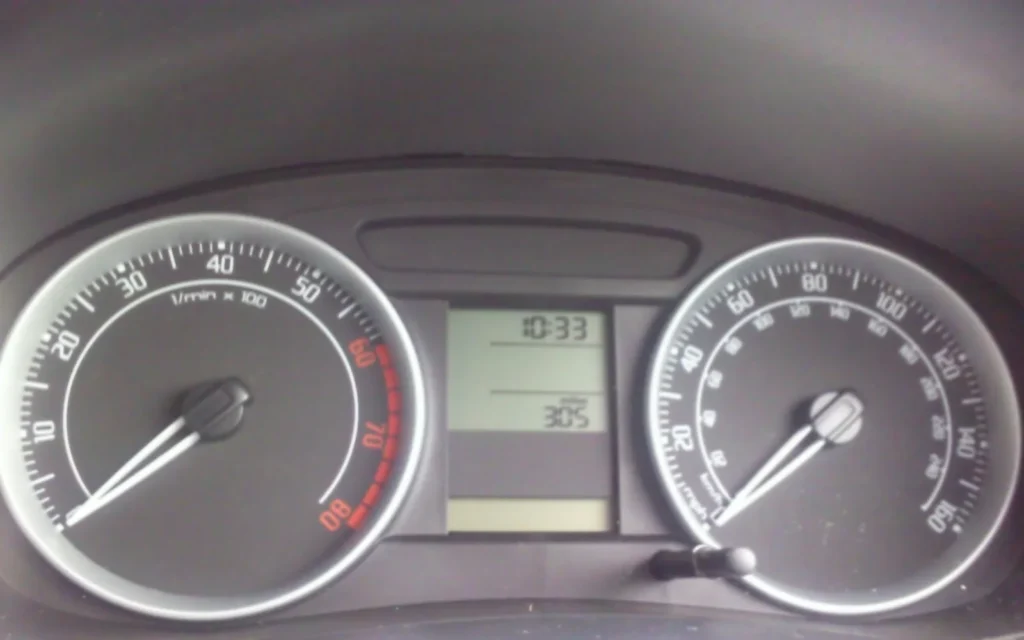
If the module is an instrument cluster, it stores the mileage, and that carries legal obligations rather than just technical ones.
Under United States federal odometer law, a replacement odometer must be set to the same mileage as the unit it replaced. Where that is not possible, the replacement must be set to zero and a disclosure label fixed in the driver door jamb, and the replacement must be disclosed when the vehicle changes hands. Penalties for odometer violations are significant.
Repairing the original cluster keeps the original recorded mileage in the vehicle and avoids the disclosure question entirely.
On vehicles beyond roughly a decade old, supply is frequently the deciding factor. Modules go out of production, remaining stock gets expensive, and used units carry unknown history. Repair is often not the cheaper option so much as the only option that exists.
Electronic modules usually fail for specific, physical reasons rather than dying wholesale:
Each of these is a locatable, replaceable component. That is the difference between component-level repair and module replacement: one fixes the specific failure, the other discards the whole unit.
A used module is not automatically a bargain. Add the programming, the configuration, the immobiliser work, and the risk that it cannot be returned once coded, and compare that total against repairing the unit already in the vehicle.
| New OEM | Used / salvage | Repair the original | |
|---|---|---|---|
| Programming needed | Usually | Usually, and may be locked | No |
| Immobiliser work | Often | Often | No |
| Odometer handling | Must be addressed | Must be addressed | Original retained |
| Availability on older vehicles | Frequently poor | Variable | Not dependent on supply |
| Known history | Yes | No | Yes — it is your unit |
| Vehicle downtime | Parts lead time | Sourcing time | Shipping and bench time |
Repair is not always right. If a module has suffered severe physical damage, extensive water immersion or fire damage, replacement is the sensible answer. The point is that replacement should be a conclusion, not a default.
Check these before buying, not after:
The wider comparison between OEM, aftermarket and remanufactured supply is in OEM vs aftermarket vs repair.
Martyn Auto Electronics repairs the unit from your vehicle and sends the same unit back. Because it is your original hardware, it returns already matched to your car — no programming, no configuration, no immobiliser synchronisation, and in the case of a cluster, the original odometer reading stays where it belongs.
You can find the service for your vehicle using the selector on the shop, see the full list on repair services, or read the process on how it works. If you are not sure which module is at fault, get in touch before sending anything.
Select your make, model and year to see the mail-in repair service that matches your module.